9 Common Misconceptions in Installing Sanitary Valves
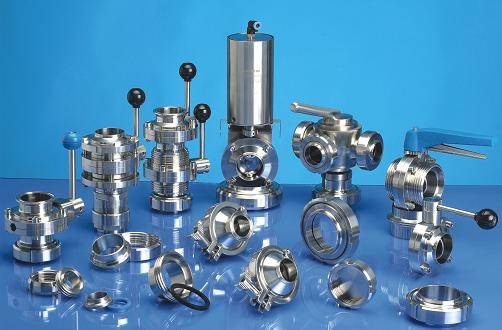
In water supply and industrial piping systems, the quality of valve installation directly impacts the system’s reliability, maintenance efficiency, and service life. Although the installation process may seem straightforward, hidden risks are often introduced due to negligence of details. This article outlines nine common misconceptions encountered during the installation of sanitary valves, helping engineers and installers avoid pitfalls and enhance overall system performance.
Misconception 1: Overly Long Bolts, Hidden Risks
The length of valve connection bolts is often overlooked. In fact, bolts should extend only one or two threads beyond the nut. Excessively long bolts not only appear unprofessional but also increase the risk of damage due to corrosion of exposed threads or accidental impact. This issue often stems from a failure to accurately calculate the required length before installation or the installer’s indifference to details. From an engineering perspective, this is an avoidable oversight.
Misconception 2: No Dedicated Isolation Valve
To save space or costs, some installations omit a dedicated isolation valve for control valves. While this may seem streamlined in the short term, it creates significant inconvenience for future maintenance. When a valve requires servicing, personnel will struggle to work safely and effectively. If space is genuinely limited, even if a gate valve cannot be installed, a compact butterfly valve should be used as an isolation device. Always remember: a design that facilitates operation and maintenance enhances long-term operational efficiency.
Misconception 3: Lack of Pressure Observation Devices
Even with the widespread adoption of automated monitoring systems (such as SCADA), local pressure indication at valves remains irreplaceable. Some projects, in an effort to cut costs, omit pressure gauges or test ports, making it impossible for field personnel to directly read pressure values during commissioning, inspections, or troubleshooting. This short-sighted design, while not necessarily violating codes, creates significant inconvenience in practice, hindering judgment and response.
Misconception 4: Overly Confined Installation Space
The layout of valve pits or valve stations must balance installation with future maintenance. Sometimes, to reduce civil excavation or initial costs, the installation space is minimized to the extreme. This can make routine maintenance, bolt removal, or tool operation exceedingly difficult. Maintenance may require longer wrenches, or future equipment additions may be necessary. Therefore, reserving adequate space is not only a construction requirement but also a provision for future operational convenience.
Misconception 5: Overlooking Future Disassembly Needs
If all components are tightly connected during installation without any separation interfaces, replacing or repairing individual components in the future will be extremely challenging. Whether using flanged joints, threaded pipes, or coupling connections, the possibility of future system disassembly should be considered. While this may not be the primary concern for the installation contractor, it is a critical aspect that owners and engineers must plan for comprehensively.
Misconception 6: Horizontal Installation of Concentric Reducers
The selection and orientation of reducers during pipe diameter changes are often misunderstood. Concentric reducers should only be used in vertical pipelines to ensure smooth fluid transition. If used in horizontal pipelines, liquid pooling or air entrapment may occur. In such cases, eccentric reducers should be selected, with attention to installation orientation. Although concentric reducers are less expensive, improper application can compromise system performance, outweighing the cost savings.
Misconception 7: Valve Pits Without Drainage Measures
Almost all valve pits are susceptible to water ingress, whether from groundwater seepage, condensation discharged during valve venting, or accidental spills during maintenance. Without designed drainage, accumulated water will accelerate equipment corrosion and compromise operational safety. When gravity drainage cannot be incorporated, small drainage pumps or float-operated automatic drainers can be used. Keeping valve pits dry is a fundamental requirement for extending equipment lifespan.
Misconception 8: No Venting Devices Installed
Entrapped air in piping systems can accumulate around valves during pressure fluctuations, potentially causing unstable valve control, water hammer, or measurement errors. Installing automatic air release valves at appropriate locations upstream or downstream of control valves can effectively remove air and maintain system stability. Eliminating air pockets proactively is far more economical and reliable than addressing issues after they occur.
Misconception 9: No Spare Connections Reserved
Reserving auxiliary ports with plugs upstream and downstream of control valves, though a minor detail, can significantly enhance system scalability and maintenance convenience. These ports can be used for temporary gauge connections, flush hoses, or future installation of monitoring sensors. In contrast, having to breach the pipeline or remove coatings post-installation due to a lack of ports is not only costly but also compromises system integrity.
Valve installation is far more than simply connecting pipes; it is a critical aspect that affects system reliability, safety, and sustainability. Avoiding the misconceptions outlined above requires not only meticulous engineering design but also the professionalism and sense of responsibility of the installers. By investing a bit more consideration during the installation phase, significant future operational and maintenance challenges can be prevented.