Sanitary Valve Selection Guide: Key Features, Applications & Selection Criteria
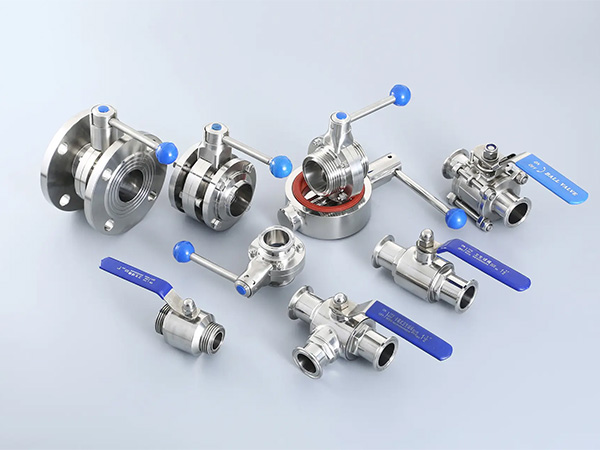
Sanitary valves are critical components designed for industries with stringent hygiene requirements, such as pharmaceuticals, food, and beverages. Their key features focus on three areas: material selection, surface finish, and sealing design. Made from stainless steel grades 304SS or 316, they are electropolished to achieve a smooth surface and paired with food-grade sealing materials like EPDM to effectively prevent media retention and contamination risks. Compared to industrial valves, sanitary valves offer advantages such as aseptic design, quick-connect fittings, and standardized certifications, making them suitable for demanding applications like handling viscous fluids or transporting particulates.
Features Overview
| Feature Category | Details |
|---|---|
| Primary Applications | Food, Pharmaceutical, and Beverage Production |
| Surface Finish Standard | Electropolished |
| Common Valve Types | Ball, Butterfly, Diaphragm Valves |
| Typical Sealing Material | Food-Grade EPDM |
| Main Connection Type | Clamp-Type (e.g., Tri-Clamp) |
| Compliance Certifications | 3A, EHEDG |
Material and Manufacturing
Sanitary valves are constructed from stainless steel that meets food-contact standards, with 316 stainless steel being the most common choice. The surface is electropolished to a smooth finish, eliminating areas where media could accumulate. The valve bore is fully drained and designed to allow smooth fluid passage without obstruction, making it suitable for media containing particles or with high viscosity.
Differences from Industrial Valves
-
Design: Sanitary valves use a crevice-free, streamlined design, while industrial valves prioritize pressure resistance.
-
Connections: Sanitary valves mainly use clamp or threaded connections; industrial valves typically use flanged or welded joints.
-
Maintenance: Sanitary valves require frequent disassembly and cleaning, whereas industrial valves emphasize long-term sealing stability.
Main Application Areas
-
Food Processing: Used in dairy pipelines, beverage filling lines, etc., complying with FDA standards.
-
Pharmaceutical Industry: Applied in sterile production lines, meeting GMP certification requirements.
-
Biotechnology: Controls fluid flow in key systems such as fermenters and purification units.
Product Type Characteristics
-
Ball Valves: Include full-bore and three-piece designs. Both are used for high-purity fluid control but differ in structure, suitable applications, and maintenance.
-
Diaphragm Valves: Feature a packless design to eliminate leakage risks.
-
Sampling Valves: Equipped with aseptic sampling ports for quality inspection.
-
Tank Bottom Valves: Specifically designed for draining tanks, featuring a 45° angled outlet.